Care guide
Caring for wool rugs
A hand-knotted wool rug asks for very little. A few habits, done regularly, are the difference between a rug that lasts ten years and one that lasts fifty.
By A1 Rugs · · 7 min read
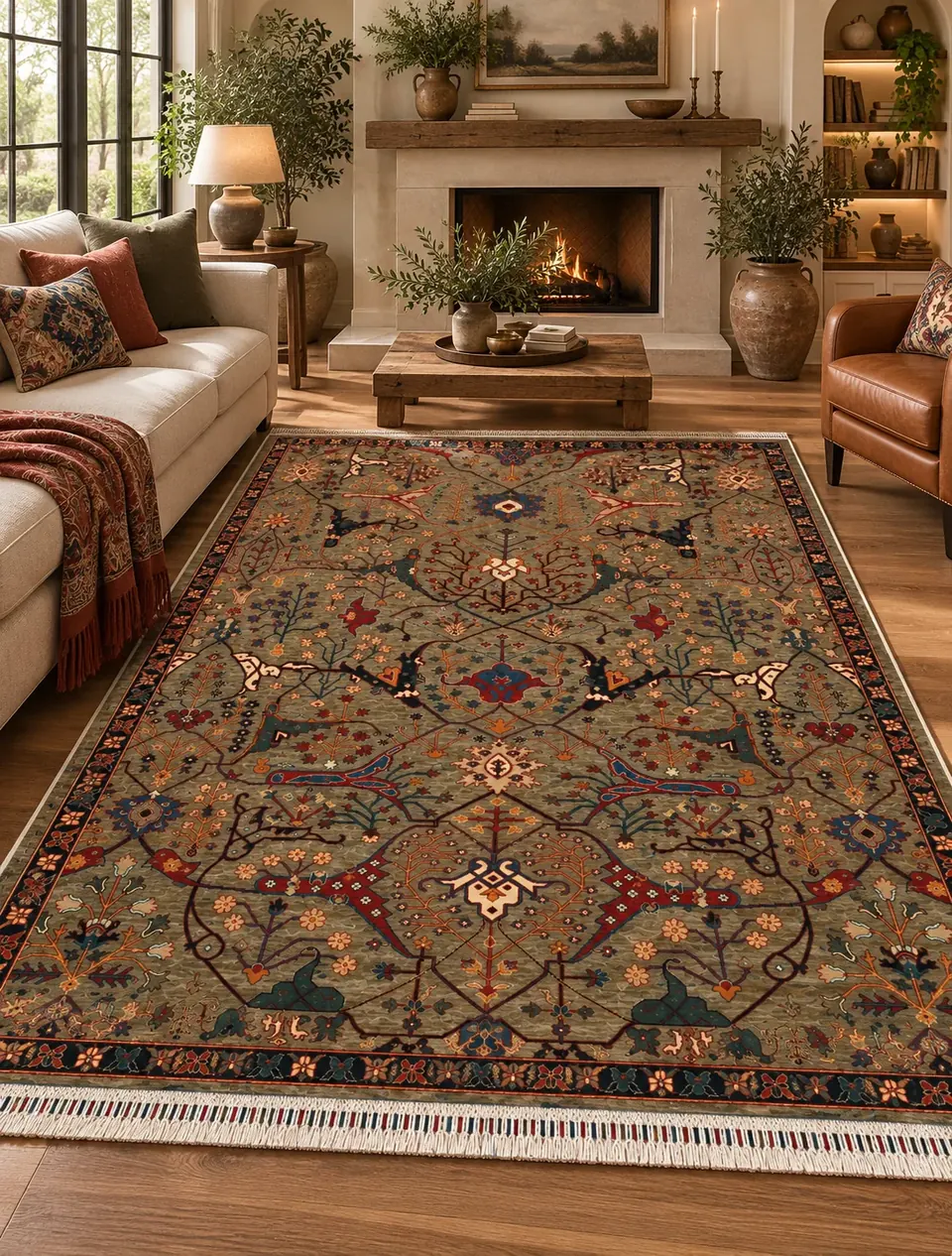
Wool is remarkably good at looking after itself. Each fibre carries a natural coating of lanolin that repels liquid and dirt, and its crimp makes it spring back after being stepped on. A well-made rug on a cotton foundation is built to be walked on every day. Most of the damage we see comes from a few avoidable things: grit, neglect, moths, sun and the wrong kind of cleaning.
Vacuuming
Grit is the quiet enemy. Sand and dust work down into the pile, and every footstep grinds them against the base of the fibres like fine sandpaper. Regular vacuuming removes it before it can do harm.
- Once a week in living areas, more often in halls and entries.
- Suction only. Turn off the beater bar or rotating brush, or use a floor-head attachment. Aggressive brushes pull fibres out of the knots.
- Go with the pile. Run your hand along the rug: one direction feels smooth, the other rough. Vacuum in the smooth direction.
- Avoid the fringe. Vacuums chew it up. Use a handheld attachment or simply leave it.
- Do the back occasionally. A few times a year, flip the rug and vacuum the reverse. The vibration shakes loose grit that the top pass cannot reach.
A new rug will shed loose fibres for the first few months. That is normal for hand-spun wool and settles down with regular vacuuming. It does not mean the rug is wearing out.
Rotation
Every room has paths: the line from the door to the sofa, the corner by the desk chair. Rotating the rug 180 degrees every six to twelve months spreads that wear evenly and evens out exposure to light. In a sunny room or a busy hallway, every six months is better. It takes two people and five minutes, and it is the single cheapest thing you can do for the life of a rug.
Blot, never rub. Cold water, never hot. And when in doubt, call a rug washer before you reach for a product.
Spills and stains
Speed matters more than anything you put on the stain. Wool's lanolin buys you time, but not forever.
- Lift any solids with a spoon or the edge of a card.
- Blot with a clean white cloth, pressing firmly. Do not rub, which spreads the stain and roughens the pile.
- Work from the outside of the spill towards the centre.
- Dampen with cold water and blot again. Repeat until nothing more transfers to the cloth.
- For a stubborn mark, add a few drops of clear, wool-safe detergent to cold water. Test on a hidden corner first, then rinse with plain water and blot dry.
- Let it dry fully, ideally with the area raised on a book or two and a fan nearby. Never leave a rug damp on the floor.
For pet urine, act quickly, blot thoroughly and rinse with cold water. A solution of equal parts white vinegar and water helps neutralise it. Large or old accidents need a professional wash, because urine soaks into the foundation and can weaken it over time.
Rug pads
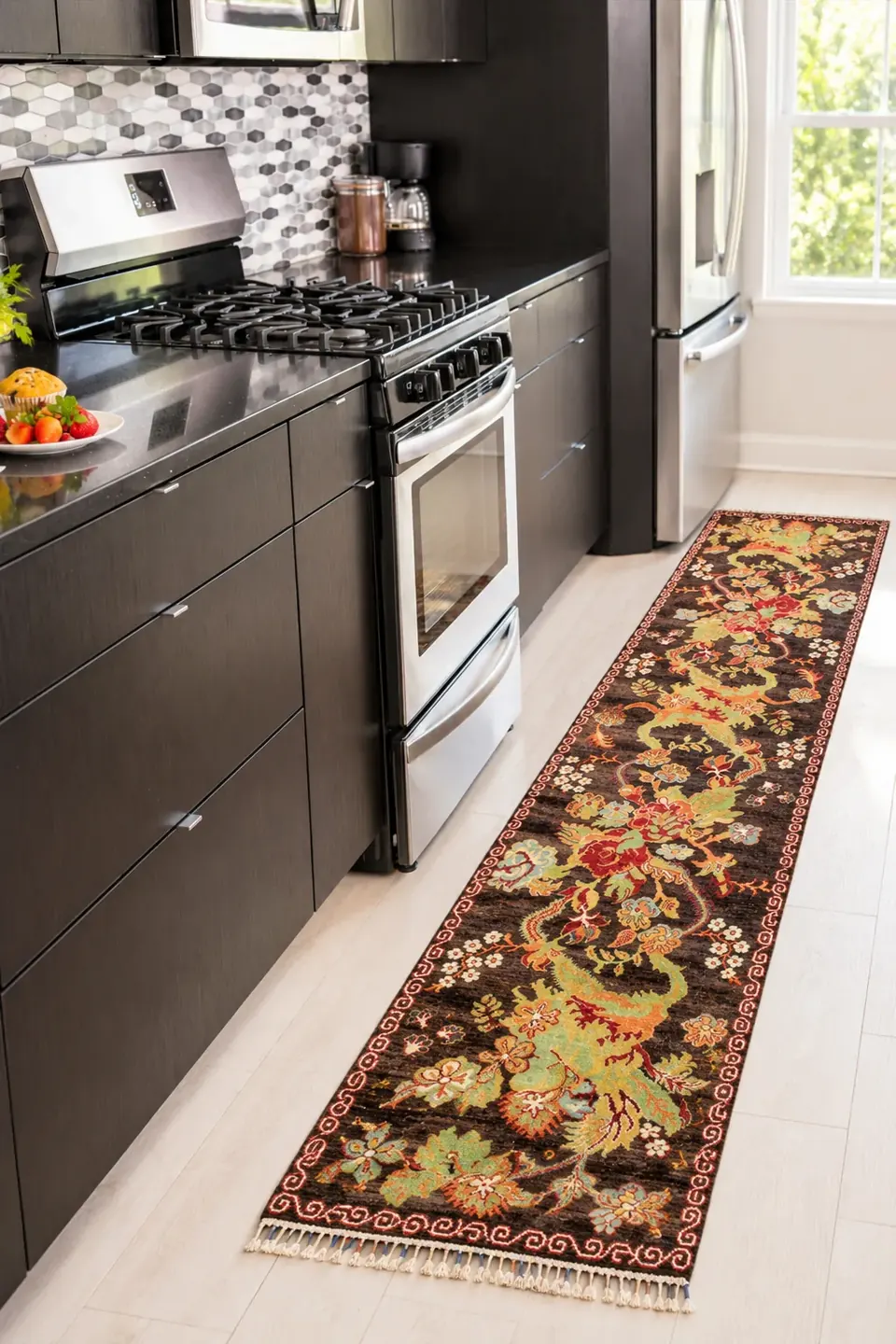
A good pad stops the rug sliding, which is a safety issue as much as a care one. It also cushions each footstep so the pile takes less punishment, and lets air circulate underneath. Choose felt, or felt bonded to natural rubber. Avoid cheap PVC or plastic pads: they break down, can stick to or discolour hardwood, and grip the back of the rug unevenly. Cut the pad an inch or two smaller than the rug on every side so the edges lie flat. On wall-to-wall carpet, use a pad designed for that purpose to stop the rug creeping.
Professional cleaning
Every three to five years in a typical home, or every one to two years in a hallway or a house with pets, a hand-knotted rug benefits from a full wash. This should be done by a rug specialist, not a carpet cleaner. Proper rug washing begins by beating or vibrating out the embedded dust, then washes the rug by immersion with wool-safe products, rinses it thoroughly and dries it flat or hung in controlled conditions.
When choosing a washer, ask how they remove dust, whether they wash by immersion, how they dry, and whether they repair fringes and edges. A good one will be happy to explain. If you are in the Seattle area and want a recommendation, ask us.
Moths
Clothes moth larvae eat wool, and they love dark, undisturbed places: under sofas, beneath beds, behind doors, in rugs that are rarely walked on. Signs include bare patches where the knots show through, fine silky tubes or webbing at the base of the pile, and sandy debris.
Prevention is mostly a matter of disturbance. Vacuum under furniture, not just around it. Lift the corners of rarely used rugs a few times a year and check the back. Moths dislike light and traffic, so a rug in daily use is rarely at risk. If you find activity, have the rug professionally washed and treated quickly, then deep-clean the room. For storage, clean the rug first, roll it rather than folding, and wrap it in breathable cotton or paper. Plastic traps moisture and invites mildew.
Sunlight
Strong sun will gradually soften any dye. Natural dyes tend to mellow gracefully rather than turn harsh, and many people love the patina, but uneven fading is a problem: one sunny half and one darker half. Rotation is the main defence. Sheer curtains, blinds during the brightest hours or UV-filtering window film reduce the effect further, and help protect your furniture and floors too.
Fringes, edges and dents
The fringe on a hand-knotted rug is the end of its warp threads, part of the structure of the rug itself. Never pull a loose thread; snip it level with the pile. If the side binding starts to wear or a fringe begins to unravel, have it repaired early, while it is a small job. Furniture dents usually lift on their own once the weight is moved. To speed things up, set an ice cube in the dent, let it melt, then fluff the pile with your fingers once it is dry.
None of this is complicated. Vacuum gently, rotate yearly, deal with spills quickly and keep moths and harsh sun in check. A rug looked after this way will very likely outlast the room it is in.
Built to be looked after
Hand-knotted wool, made to last decades.
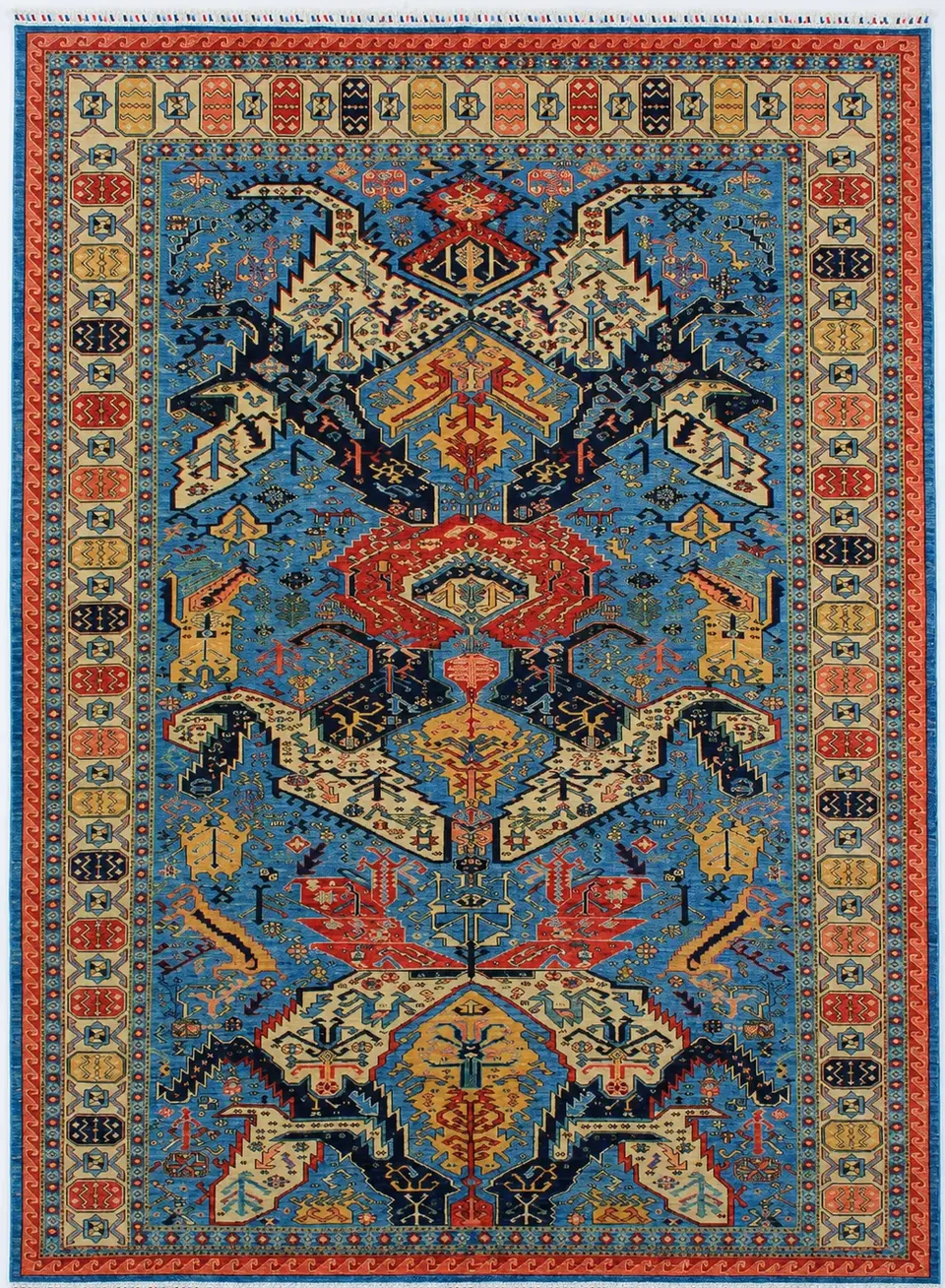
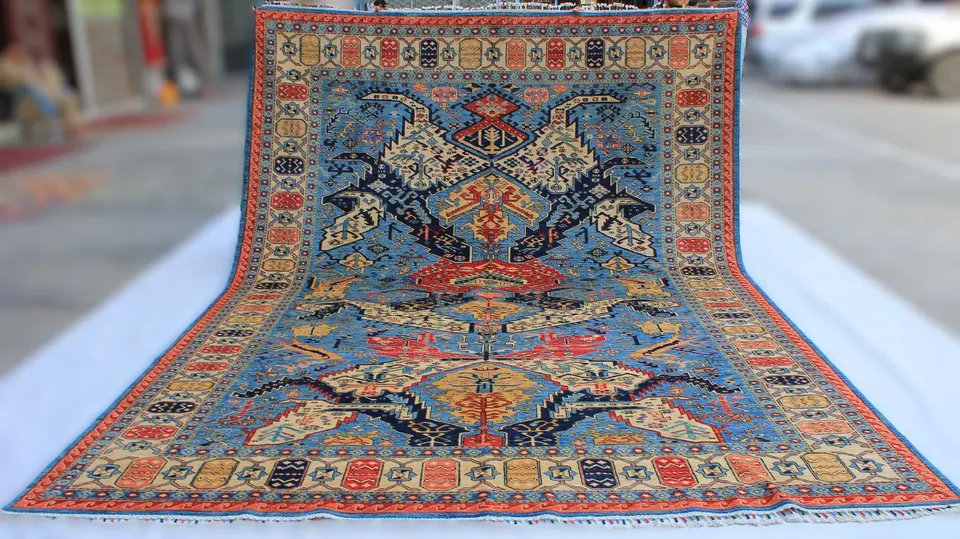
Heriz Medallion Rug
12'1" × 8'10" · 9×12 ft
$2,150
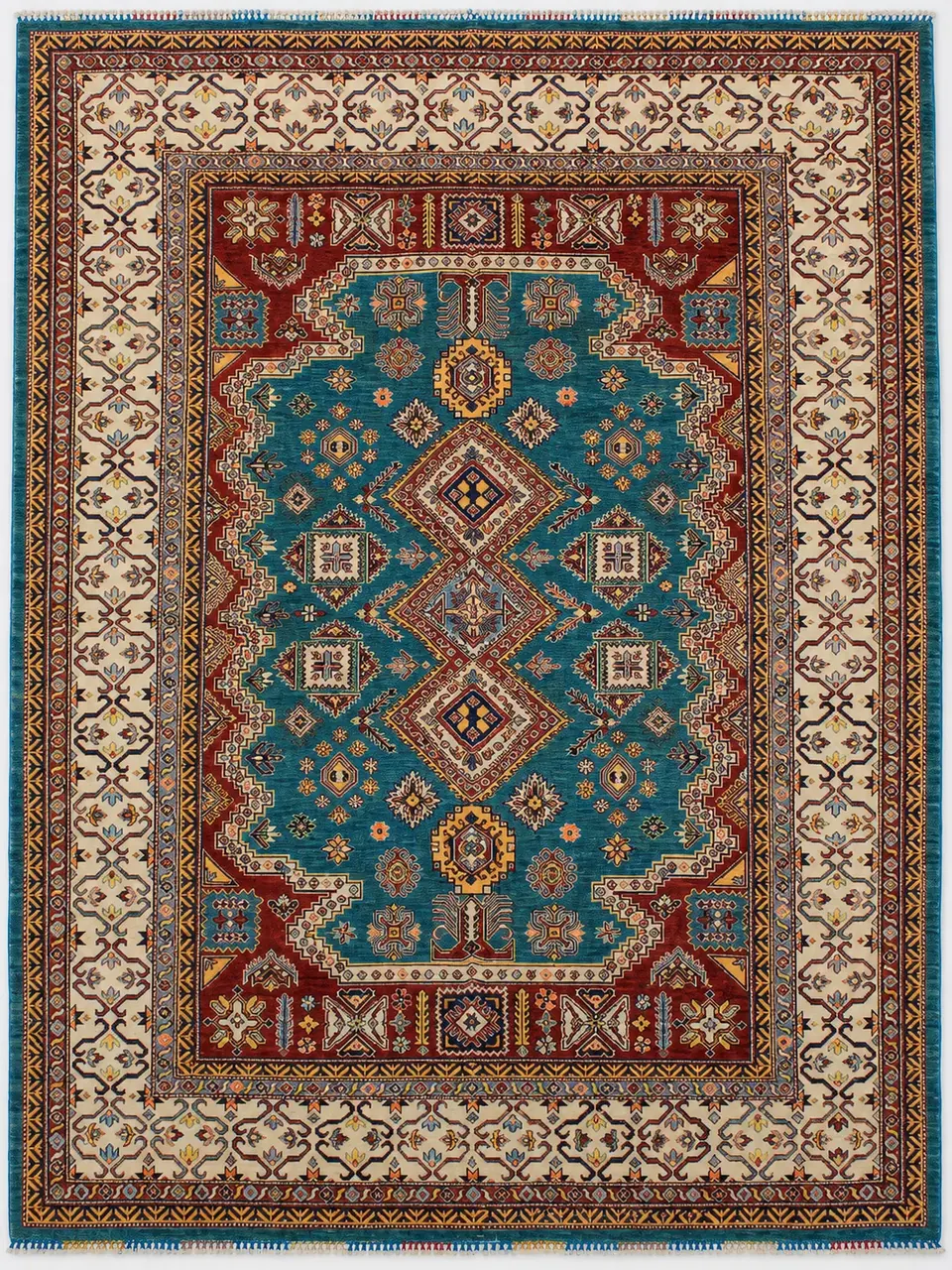
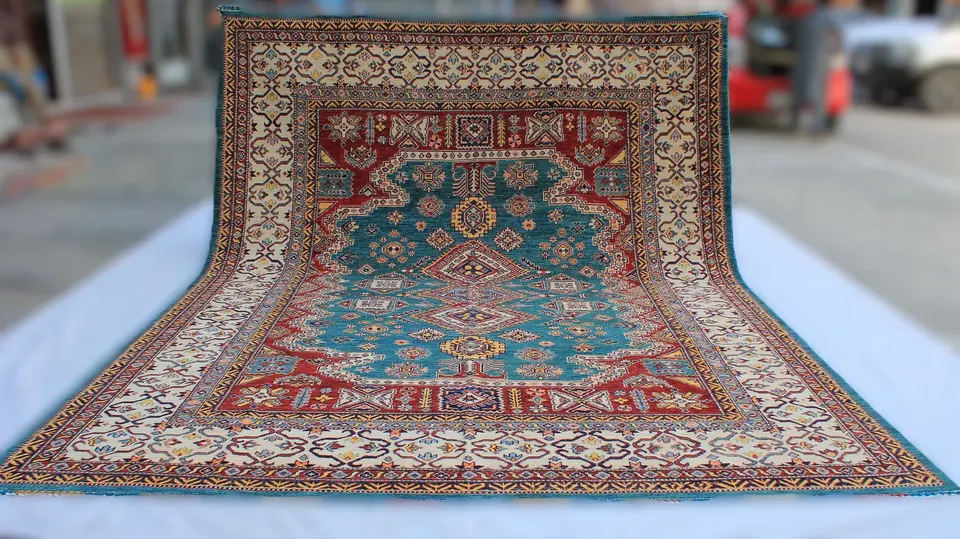
Royal Turquoise Medallion Rug
11'8" × 8'11" · 9×12 ft
$2,050
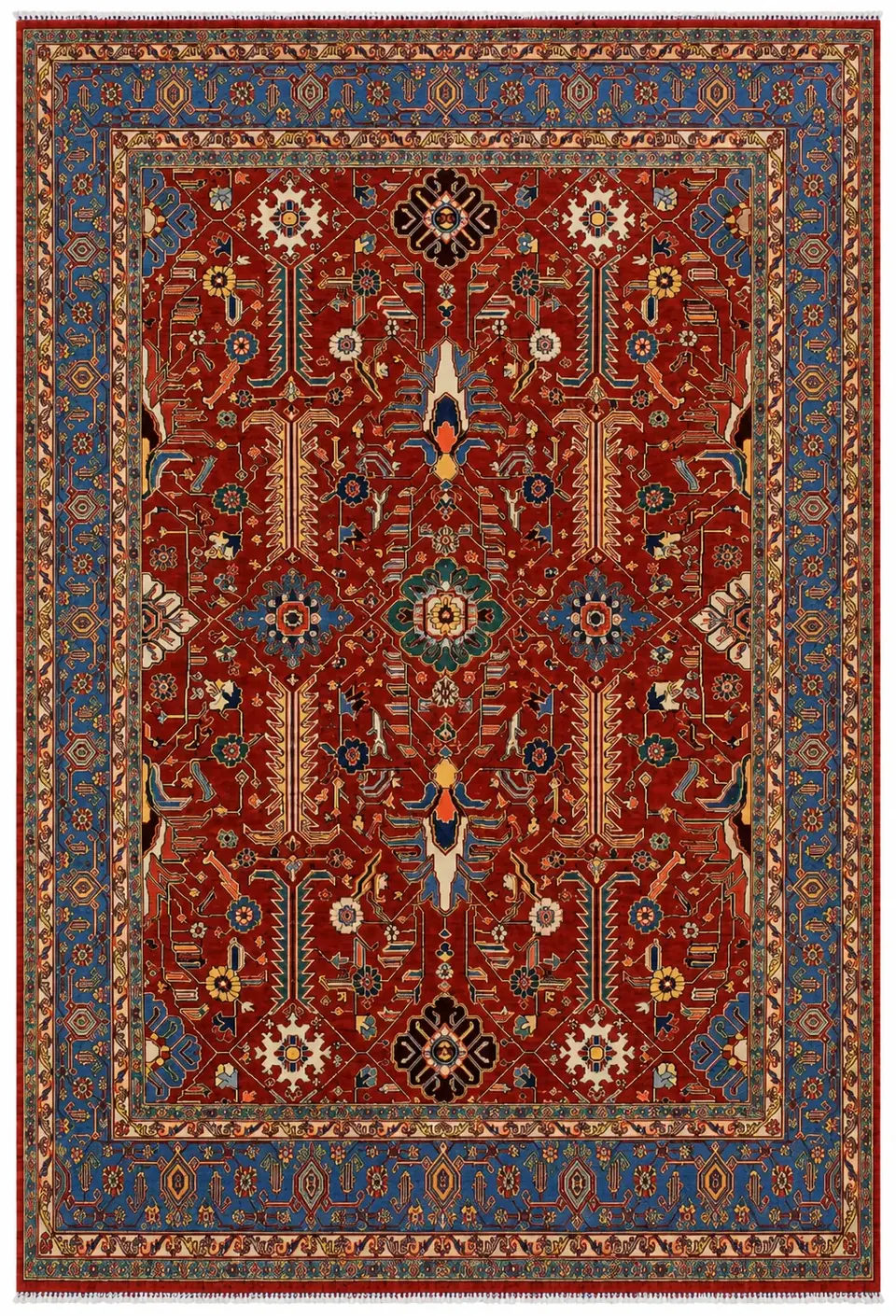
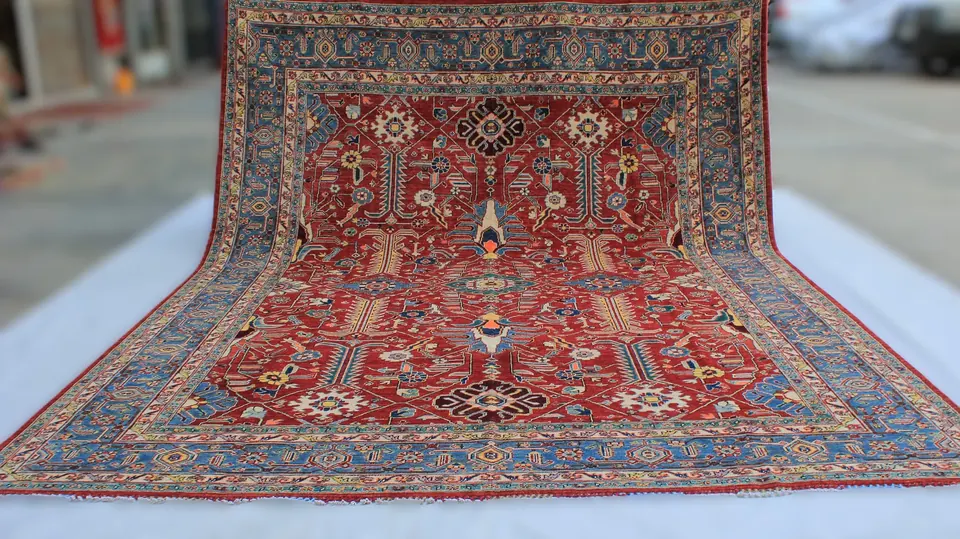
Crimson Heritage Geometric Rug
12' × 9'1" · 9×12 ft
$2,050
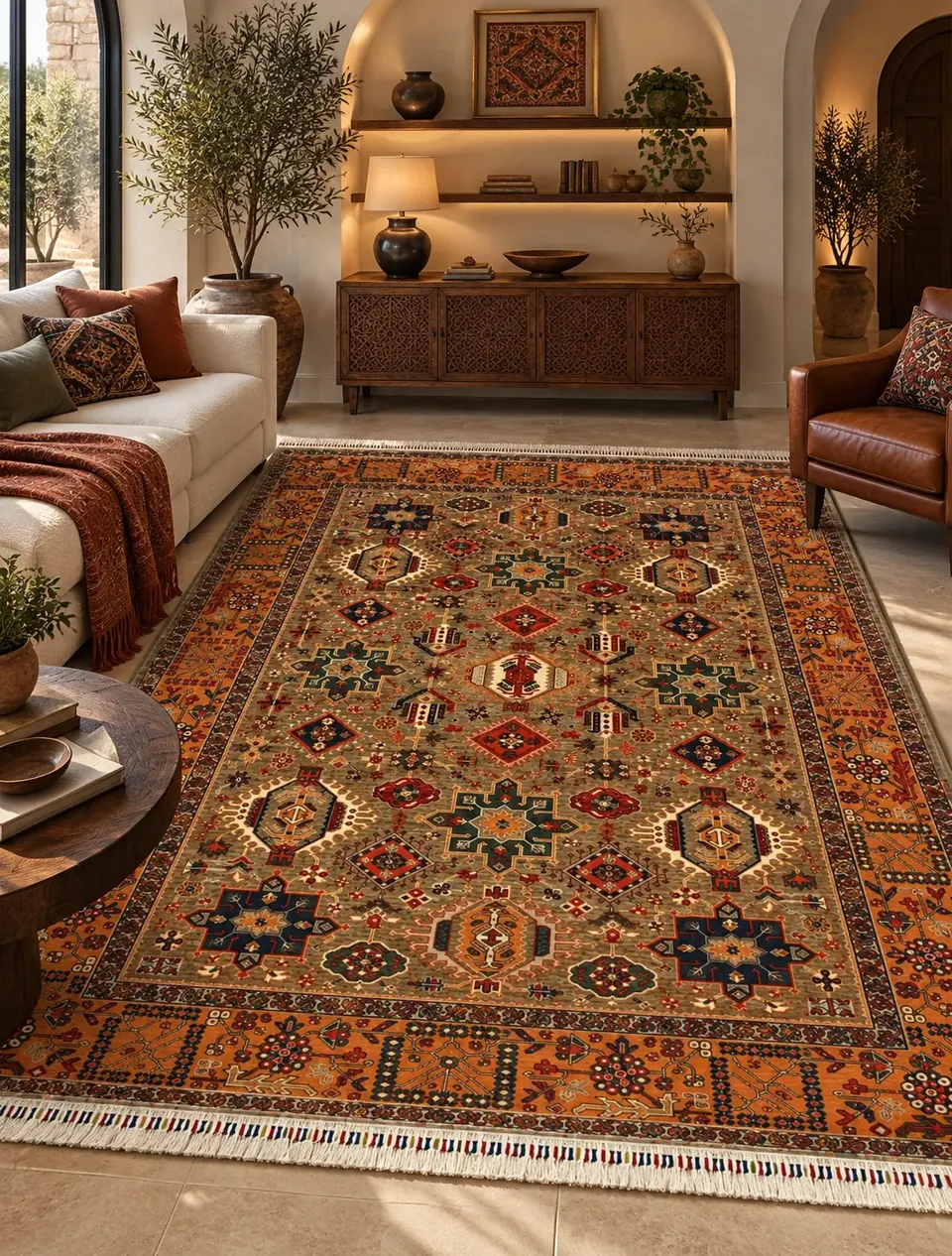
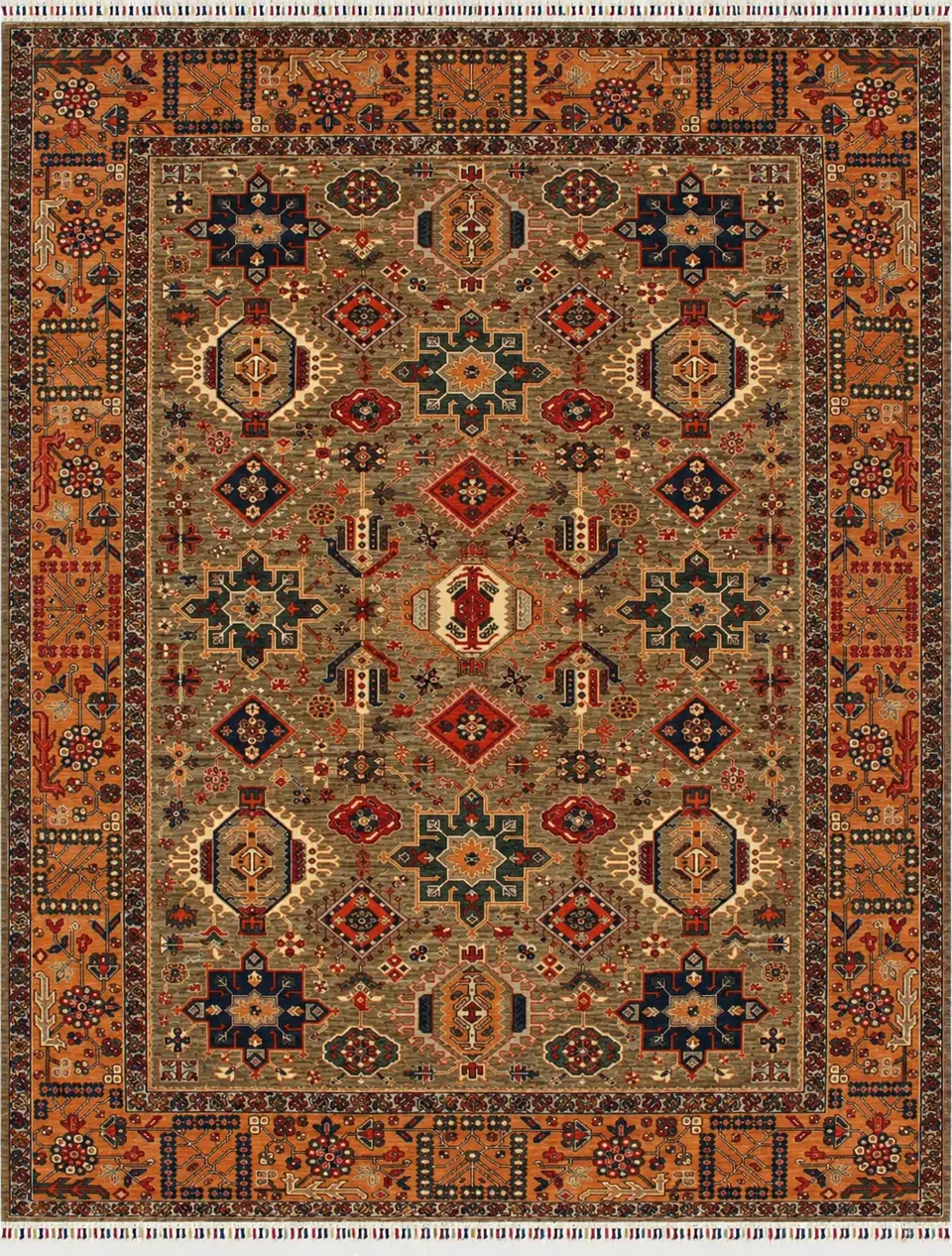
Ornate Heriz Rug with Fringed Borders
11'9" × 8'10" · 9×12 ft
$2,049
Keep reading: How to choose a rug size · Chobi vs Heriz